Bring a large pot of generously salted water (like seawater) to a rolling boil— this seasons your pasta perfectly from the start!
While waiting, toast the whole black peppercorns in a dry skillet over medium heat for 2-3 minutes until fragrant and aromatic—shake often to avoid burning. This step unlocks incredible depth!
Grind the toasted peppercorns coarsely (keep some texture for that signature bite).
Finely grate the Pecorino Romano using a Microplane or the smallest holes on your grater—fluffy and fine is key for smooth melting.
Drop the pasta into the boiling water and cook until just shy of al dente (about 1-2 minutes less than package instructions)—it'll finish in the sauce.
Reserve at least 2 cups of starchy pasta water before draining—trust me, you'll need it!
In a large skillet or the pasta pot off heat, add a ladle of hot pasta water and half the grated cheese—stir vigorously to create a creamy paste (add more water if needed for smoothness).
Toss in the freshly ground pepper and mix—your kitchen will smell amazing at this point!
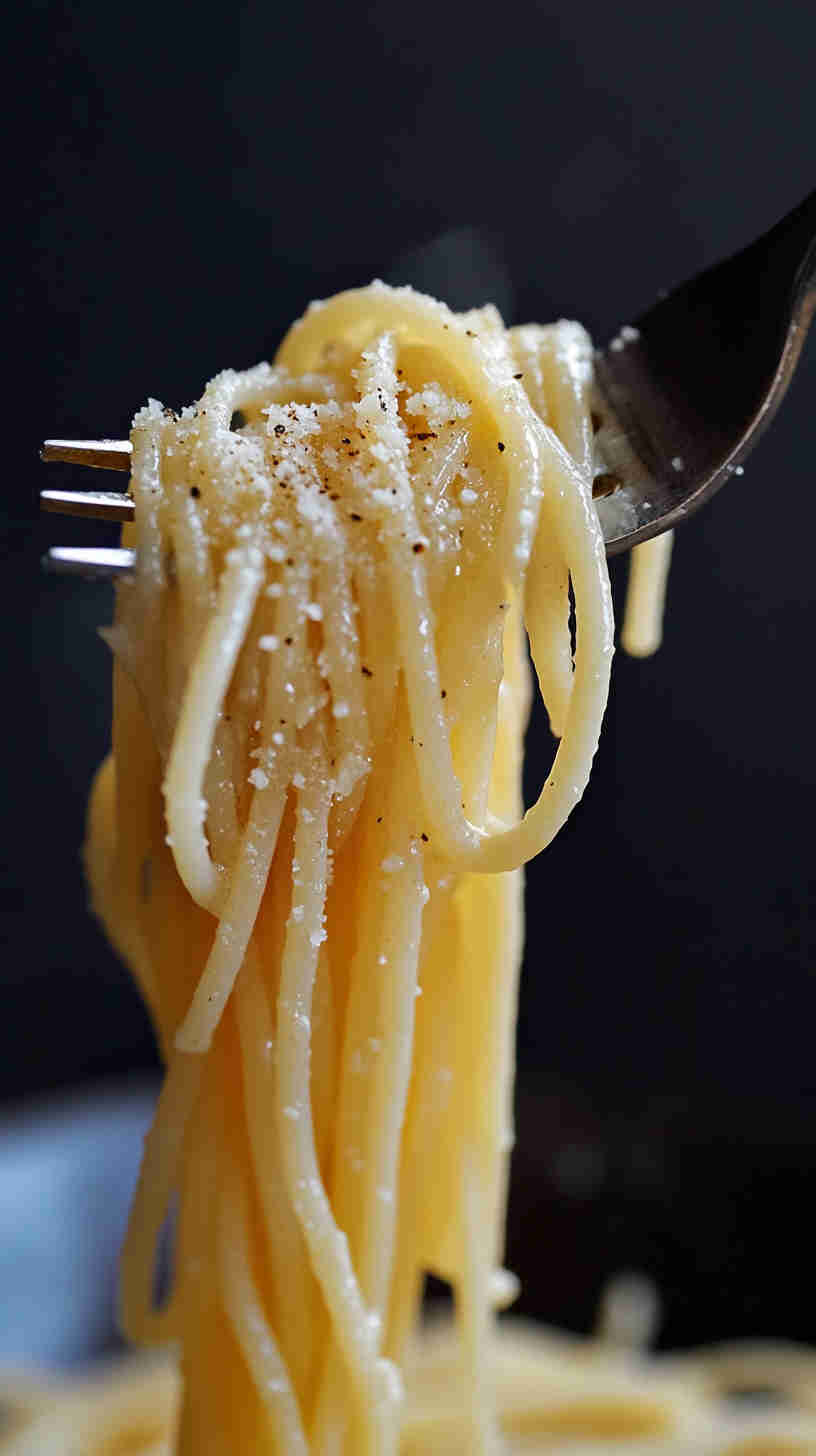
Add the drained pasta to the skillet along with another splash of pasta water—toss energetically over low heat, adding cheese and water gradually until a glossy, silky sauce coats every strand beautifully.
Remove from heat immediately, plate hot, and finish with extra grated Pecorino and a grind of pepper—dig in right away for peak creaminess and joy!